A trained cleaner degreasing stainless steel equipment in a commercial restaurant kitchen after food and utensils have been removed
Restaurant kitchen cleaning · Euless

Restaurant Kitchen Cleaning in Euless

Detailed degreasing and high dusting for cooking lines, prep areas, equipment exteriors, and hard-to-reach overhead surfaces.

✓Cooking-line degreasing
✓Accessible high dusting
✓Surface-specific methods
✓Written cleaning scope
Commercial kitchen care

Restaurant Kitchen Cleaning Euless Operators Can Schedule Around Service

Restaurant Kitchen Cleaning Euless should address the grease, food residue, dust, and soil that routine closing work does not fully remove. Irving Restaurant Cleaning handles planned deep cleaning for commercial kitchens, with attention to cooking-line surfaces, equipment exteriors, floors, walls, shelving, and overhead areas. The scope is set around the kitchen's condition and operating schedule rather than a generic checklist.

Our team works as a professional restaurant company in Irving serving nearby Euless kitchens with a practical process: review the space, identify access limits, set the cleaning scope, and coordinate timing with management. The business is based at 307 N Rogers Rd, Suite 4, Irving, TX 75061. That local base supports work in Euless without treating every restaurant as if it has the same layout or soil load.

Euless sits near State Highway 183 and Dallas Fort Worth International Airport, where restaurants may handle commuter, hotel, and airport-area traffic. Glade Parks adds another concentration of dining businesses with varied hours and kitchen formats. Those operating patterns matter because cleaning may need to occur after closing, between service periods, or on a planned maintenance day. We confirm which equipment can be moved, which areas must remain accessible, and when cleaned surfaces can dry before the kitchen returns to use.

Request a Callback
Cleaning scope

What a Detailed Kitchen Cleaning Can Cover

A commercial kitchen deep clean starts with the areas that collect the heaviest residue. Typical work may include degreasing cooking-line surfaces, backsplashes, equipment sides and legs, prep tables, shelving, wall surfaces, baseboards, and washable floor areas. Crews can also address reachable spaces beneath and behind movable equipment when management has approved access.

Cleaning methods must fit the surface. Stainless steel needs non-scratching tools and attention to the grain. Painted walls, sealed flooring, rubber mats, and plastic components may each require different chemistry and dwell time. Food-contact surfaces require a separate final treatment under the restaurant's sanitation procedures. Degreasing removes oily soil; sanitizing is a distinct step performed on a cleaned surface with an appropriate product and contact time.

The agreed scope should identify exclusions before work begins. Internal appliance repairs, inaccessible electrical components, pest treatment, and fire-suppression work are separate specialties. Kitchen exhaust hood and duct cleaning may also require a qualified exhaust-system provider. Clear boundaries protect the equipment and allow the cleaning crew to concentrate on the surfaces included in the job.

Request a Callback
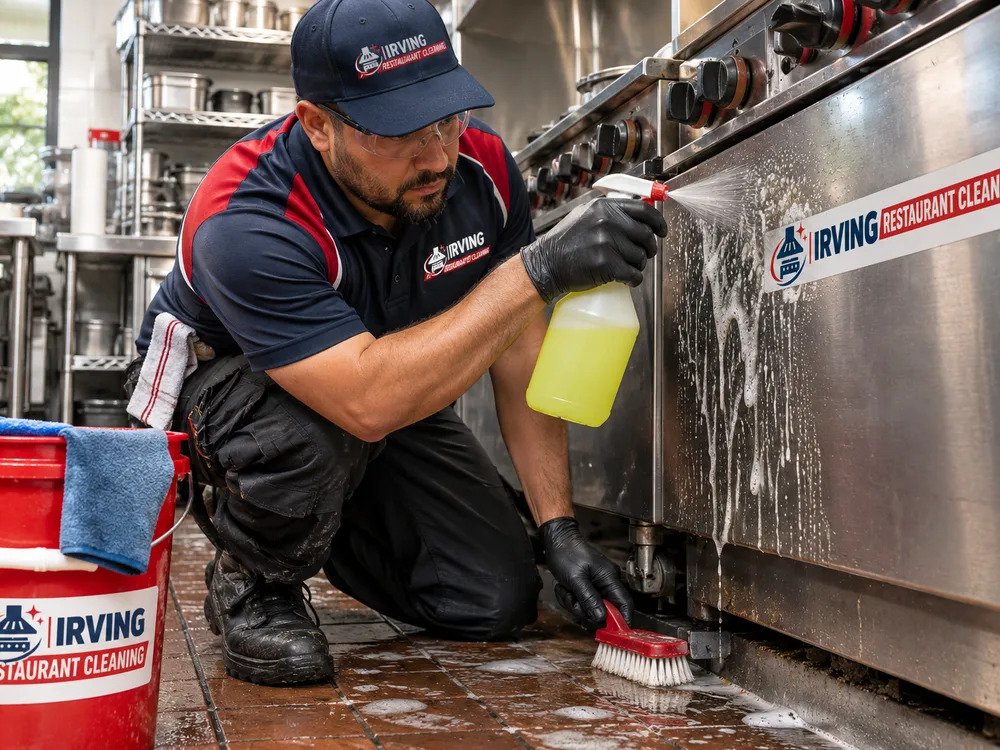
A commercial kitchen worker applying degreaser to stainless steel equipment exteriors and cleaning the floor edge beneath a cooking line
Surface-specific methods help remove grease without damaging stainless steel or finished flooring.
Cleaning zones

Cleaning Priorities for an Euless Commercial Kitchen

Cooking-Line Degreasing

Grease accumulates on equipment exteriors, adjacent walls, ledges, casters, and floor edges. The crew allows suitable dwell time, agitates the soil, and removes the released residue rather than spreading it across nearby surfaces.

Floors and Perimeters

Work can cover washable flooring, corners, baseboards, thresholds, and reachable spaces under movable equipment. Soil is treated according to the floor finish, and excess moisture is controlled around equipment and transitions.

Prep and Storage Areas

Empty shelving, prep-table frames, rack exteriors, and non-food-contact surfaces can be cleaned after restaurant staff secure ingredients, utensils, and loose inventory. Keeping those responsibilities clear prevents delays at the start.

Walls, Doors, and Touchpoints

Washable wall surfaces, push plates, handles, door edges, and pass-through surrounds can hold greasy fingerprints and splatter. These details are included when listed in the written scope.

Equipment Exteriors

The service can address accessible fronts, sides, legs, wheels, and lower panels. Crews do not open protected mechanical or electrical assemblies unless that access has been specifically approved and is safe.

Planned Maintenance

Recurring service can focus on the areas that outpace daily cleaning. Frequency depends on cooking volume, menu, ventilation, staffing, and how quickly grease or dust returns.

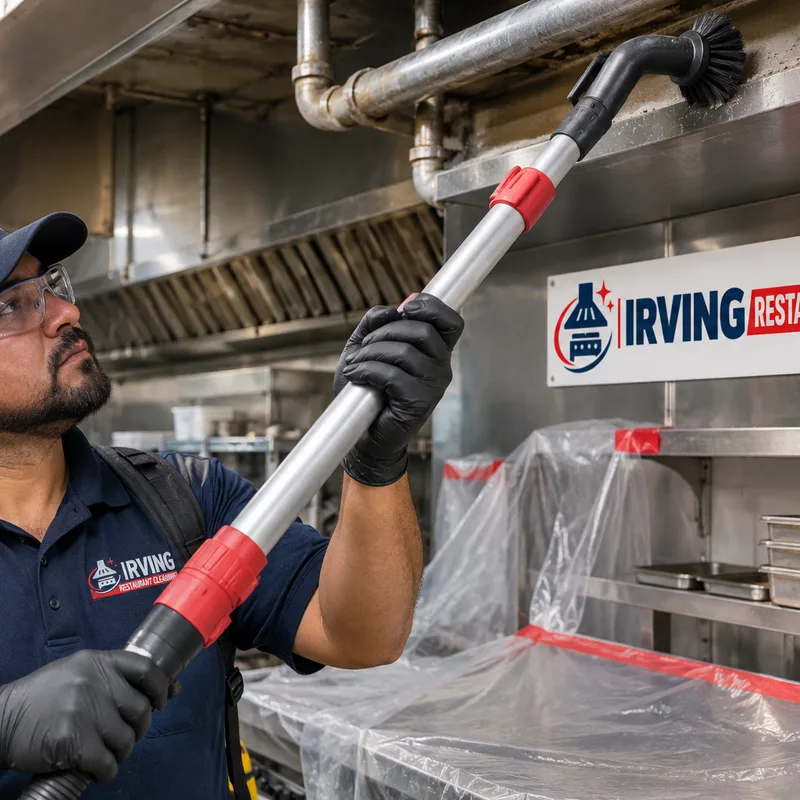
A commercial cleaner using an extension vacuum tool to remove dust from exposed pipes and overhead ledges in a restaurant kitchen with prep surfaces protected
High dusting controls overhead residue while protecting the food preparation zone.
Overhead cleaning

Restaurant High Dusting in Euless

Restaurant High Dusting Euless targets dust and greasy film on elevated, accessible surfaces that are easy to miss during daily closing. Common scope items include the tops of pipes, conduit, refrigerator cases, shelving, wall ledges, light housings, and other overhead structures that can be reached safely. Each area is reviewed first because ceiling height, suspended fixtures, exposed utilities, and equipment placement affect access.

High dusting should control falling debris. Food, clean utensils, and exposed prep items need to be removed or protected before work starts. The crew can use extension tools, microfiber systems, HEPA-filtered vacuum equipment, or damp wiping depending on the residue and surface. Dry dust and greasy buildup are handled differently; oily deposits generally need compatible cleaning chemistry rather than simple dusting.

Safety also determines the method. Workers should not climb on kitchen equipment or improvise access around hot appliances. The service plan identifies whether approved ladders or other access equipment can be positioned without blocking exits or damaging floors. In Euless restaurants near airport and highway corridors, scheduling this work outside active food preparation helps limit disruption and gives management time to reopen the area in an orderly way.

Request a Callback
Cleaning process

How the Cleaning Process Works

  1. Step01

    Walk Through the Kitchen

    We review the cooking line, prep zones, storage areas, floors, wall surfaces, and overhead access. Management can point out recurring trouble spots, delicate finishes, restricted equipment, and the time available for service.

  2. Step02

    Define the Scope

    The written plan identifies included surfaces, high-dusting needs, access responsibilities, exclusions, and scheduling. It also notes whether restaurant staff will empty shelves, move inventory, cool equipment, or arrange access behind heavy appliances.

  3. Step03

    Prepare the Work Area

    Food and clean utensils are secured, equipment is cooled when required, and sensitive areas are protected. The crew sets up tools and cleaning products based on the materials and soil found during the walkthrough.

  4. Step04

    Clean in a Controlled Order

    High surfaces are generally addressed before lower surfaces and floors so released debris can be collected. Degreasing follows product dwell-time requirements, and tools are changed or cleaned to avoid transferring heavy soil.

  5. Step05

    Review the Completed Scope

    The crew and restaurant representative check the listed areas, note any surfaces that could not be accessed, and identify maintenance priorities. Management receives a clear account of what was completed before the kitchen returns to normal use.

Request a Callback
Service planning

A Scope Built Around the Kitchen, Menu, and Schedule

Cleaning requirements change with the operation. A kitchen that performs heavy frying may develop oily residue faster around the cooking line and overhead surfaces. A bakery may have more fine dry material on ledges and equipment tops. Open kitchens can place extra emphasis on visible stainless steel, walls, and floor edges. The walkthrough lets the service match the actual soil rather than assumptions about the restaurant type.

Access has a direct effect on results. If heavy equipment cannot be moved safely, the written scope should state which spaces remain inaccessible. Restaurant staff may need to disconnect or reposition equipment through the appropriate vendor before the appointment. Gas, electrical, refrigeration, and fire-suppression components should never be disturbed simply to reach a dirty surface.

Euless dining locations range from freestanding restaurants to tenant spaces in retail developments. A freestanding operation may have its own loading and disposal arrangements, while a leased commercial space may have property rules for after-hours entry, water use, noise, and waste handling. Confirming those conditions before arrival gives the crew a workable service window and prevents conflicts with neighboring tenants or property management.

A recurring plan is useful when the same buildup returns between deep cleanings. The interval should be based on inspection, cooking methods, operating hours, and daily cleaning performance. Some kitchens need more frequent attention at the line and less frequent high dusting. Others benefit from rotating zones so detailed work fits within shorter closures.

Request a Callback
Planning your budget

How Much Does Restaurant Kitchen Cleaning Cost in Euless?

Restaurant kitchen cleaning in Euless typically ranges from $500 to $2,500 or more per visit. A compact kitchen with moderate buildup may fall near the lower end, while a large cooking line, heavy grease, extensive floor work, or high-access cleaning can raise the price.

Final cost depends on kitchen size, soil level, equipment access, ceiling height, service timing, and whether staff prepare the area in advance. Hood ducts, equipment repair, and specialty access may require separate providers. The exact price is confirmed after a walkthrough and written scope.

Request a Callback

Arrange a walkthrough to identify grease buildup, overhead dust, access limits, and the best service window before the work is scheduled.

Call for a Free Quote
Common questions

Questions About Restaurant Kitchen Cleaning in Euless

Can restaurant kitchen cleaning be scheduled after closing?+

Yes, after-hours scheduling may be available when the scope, building access, and reopening time are confirmed in advance. This is often practical for Euless restaurants serving highway, hotel, and airport-area customers because the crew can work without crossing active cooking or prep traffic. Equipment must have enough time to cool, and cleaned areas may need drying time before opening.

How long does a commercial kitchen deep cleaning take?+

A focused cleaning may take several hours, while a large kitchen with heavy grease and overhead work may require a full shift or staged visits. Duration depends on square footage, equipment density, buildup, high-dusting access, and how much preparation is completed before arrival. A walkthrough provides the most reliable schedule.

Does Restaurant Kitchen Cleaning Euless include moving equipment?+

Light, movable items may be repositioned when it is safe and approved, but heavy or connected equipment usually requires restaurant staff or a qualified vendor. Gas lines, hardwired electrical equipment, refrigeration connections, and fire-suppression components should not be disturbed by a general cleaning crew. Access responsibilities are recorded in the scope.

Is high dusting included with kitchen cleaning?+

High dusting can be included when overhead surfaces and safe access are identified during the walkthrough. In an Euless kitchen, the work may cover reachable pipes, conduit, ledges, light housings, and equipment tops. Ceiling height, greasy residue, exposed food areas, and the access equipment required can affect time and price.

Do we need to remove food and utensils before service?+

Yes, exposed food, clean utensils, smallwares, and loose inventory should be removed or securely protected before cleaning starts. Restaurant management should also identify sensitive equipment, locked storage, and any surfaces that cannot get wet. These steps reduce contamination risks and give the crew clear access.

Does this service include exhaust hood and duct cleaning?+

Kitchen-surface cleaning does not automatically include the internal exhaust hood, fan, or duct system. Those components may require a separate qualified provider and documentation appropriate to the exhaust system. The walkthrough distinguishes accessible exterior surfaces from internal grease-removal work so the quote does not combine unrelated scopes.

How often should an Euless restaurant schedule deep cleaning?+

The right interval is based on cooking volume, menu, grease production, daily procedures, and inspection of hard-to-reach areas. Frying and high-volume line cooking can require more frequent degreasing, while overhead dusting may follow a different schedule. A rotating maintenance plan can keep priority zones manageable without closing the entire kitchen for every visit.

Plan your scope

Plan a Cleaner Commercial Kitchen

Tell Irving Restaurant Cleaning about the kitchen layout, buildup, overhead surfaces, and preferred service window. We will help define a practical scope for your Euless restaurant.