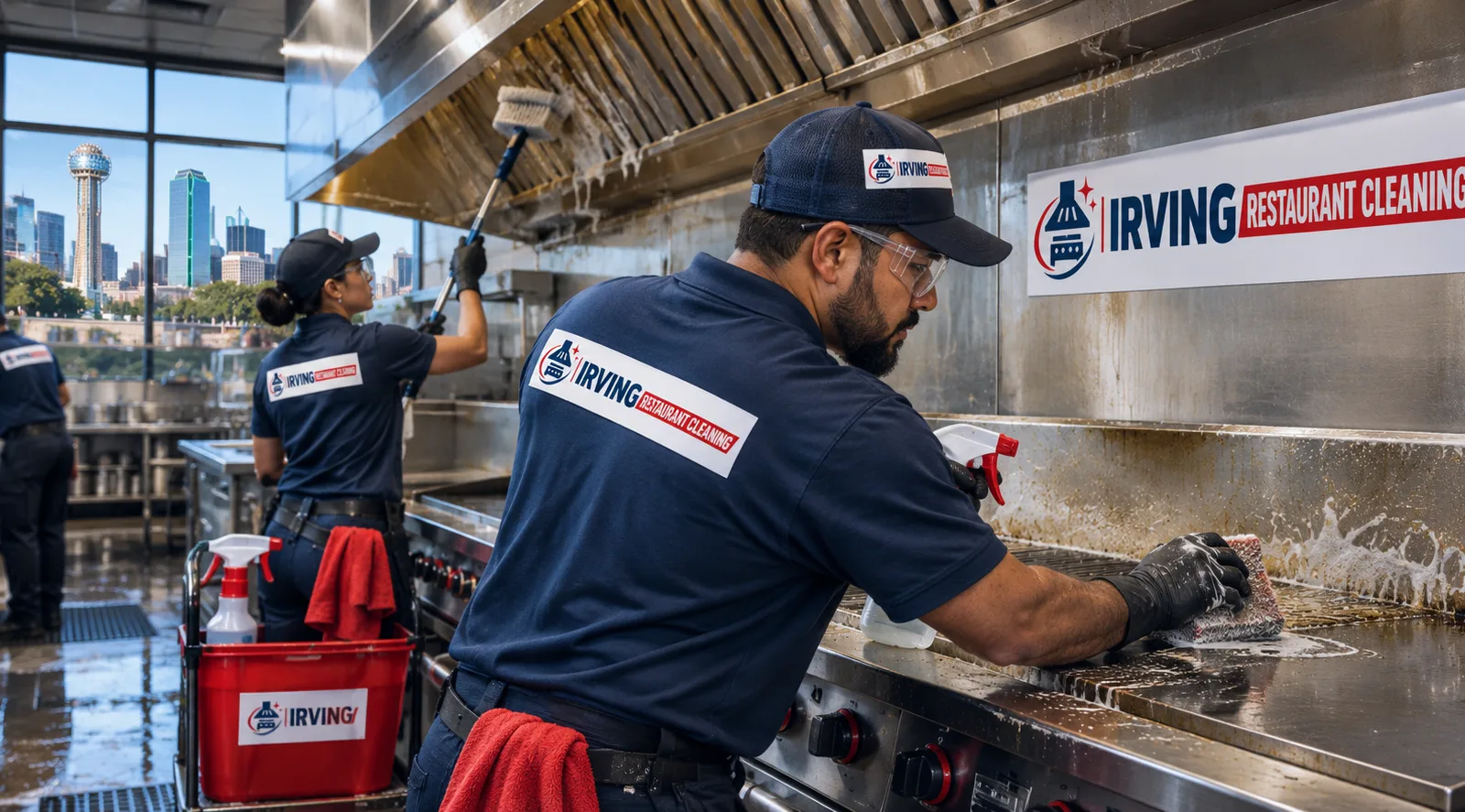
A trained restaurant cleaning crew degreasing stainless steel cooking equipment in a professional Dallas-area commercial kitchen
Restaurant cleaning service in Dallas

Restaurant Cleaning Dallas

Detailed commercial kitchen cleaning built around your equipment, operating hours, food-safety procedures, and inspection priorities.

✓Equipment-specific care
✓Written cleaning scope
✓After-hours coordination
✓Irving and Dallas County
Commercial kitchen care

Commercial Kitchen Cleaning Planned Around Your Operation

Restaurant Cleaning Dallas requires more than wiping visible surfaces at closing time. Grease migrates beneath equipment, food debris collects along wall and floor junctions, and carbon deposits build up on cooking surfaces. A professional scope addresses those areas without losing sight of equipment controls, electrical components, gas connections, and manufacturer care instructions.

Irving Restaurant Cleaning provides scheduled and project-based care for commercial kitchens in Irving and across Dallas County. Our team of restaurant specialists across the Irving area organizes the work around the kitchen layout, operating schedule, equipment condition, and priority areas identified by management. The goal is a written scope that the crew can follow consistently, whether the work supports routine upkeep, a corrective deep clean, or preparation for an inspection.

Local kitchens vary sharply. Restaurants near the Irving Convention Center may need cleaning timed around events and busy service periods. Las Colinas dining rooms often operate within mixed-use properties where loading access, security, and overnight work must be coordinated. Kitchens serving the Dallas Fort Worth International Airport area can face extended operating hours that leave short maintenance windows. In the Irving Heritage District, smaller or older commercial spaces may have tight cook lines and limited equipment clearance. Those conditions affect crew size, staging, and the time needed to reach hidden soil.

Request a Callback
Cleaning zones

What Restaurant Cleaning Can Cover

Build the scope around the spaces carrying the heaviest soil load, the equipment that needs careful handling, and the areas customers see.

Request a Callback

Cookline and Hood-Adjacent Surfaces

Degreasing can cover ranges, fryers, flattops, charbroilers, backsplashes, equipment sides, and accessible exterior areas around the cookline. Exhaust duct and fan cleaning should remain within the scope of a properly qualified provider when required.

Floors, Walls, and Hard-to-Reach Areas

Service may include floor scrubbing, grout attention, baseboards, washable wall surfaces, floor drains, and soil beneath movable equipment. Crews use separate tools and appropriate chemistry to reduce cross-contamination between kitchen zones.

Prep and Storage Areas

Cleaning can address prep tables, shelving, racks, sinks, exterior refrigeration surfaces, and accessible storage areas after food and loose items are removed or protected. Food-contact surfaces require a suitable wash, rinse, and sanitizing procedure.

Dining and Service Spaces

A broader restaurant scope may include dining floors, counters, service stations, entry glass, restrooms, and other customer-facing areas. These tasks can be coordinated with kitchen work to reduce disruption.

Corrective Deep Cleaning

Heavy grease, neglected edges, carbonized residue, and buildup behind equipment often need more dwell time and agitation than routine cleaning. A site review identifies where restoration is realistic and where damaged material may need repair.

Recurring Maintenance

A repeat schedule assigns high-use areas by frequency instead of treating every surface the same. Daily staff duties remain separate from weekly, monthly, or periodic professional cleaning tasks.

Equipment awareness

Restaurant Equipment Cleaning Dallas Kitchens Can Schedule Safely

Restaurant equipment cleaning starts with the equipment type and the manufacturer's instructions. Stainless steel exteriors, cast-iron grates, chrome cooking surfaces, aluminum parts, rubber gaskets, and painted panels do not all tolerate the same chemical or tool. An abrasive pad that removes carbon from one component can permanently scratch another.

Before cleaning, controls are placed in a safe state and equipment is allowed to cool. Removable parts may be soaked or cleaned separately when appropriate. Technicians apply the selected degreaser for its required dwell time, agitate the residue, and remove loosened soil without flooding control panels, motors, burners, or electrical connections. Food-contact components are rinsed and sanitized with products used according to their labels.

The scope should clearly distinguish accessible cleaning from disassembly that requires an appliance technician. Cleaning crews should not alter gas lines, open sealed electrical assemblies, or perform repairs. Refrigeration coils, ice machines, hood ducts, and fire-suppression components may also require specialized procedures or separate qualified vendors. Defining those limits protects the equipment and prevents cleaning work from interfering with required maintenance.

Request a Callback
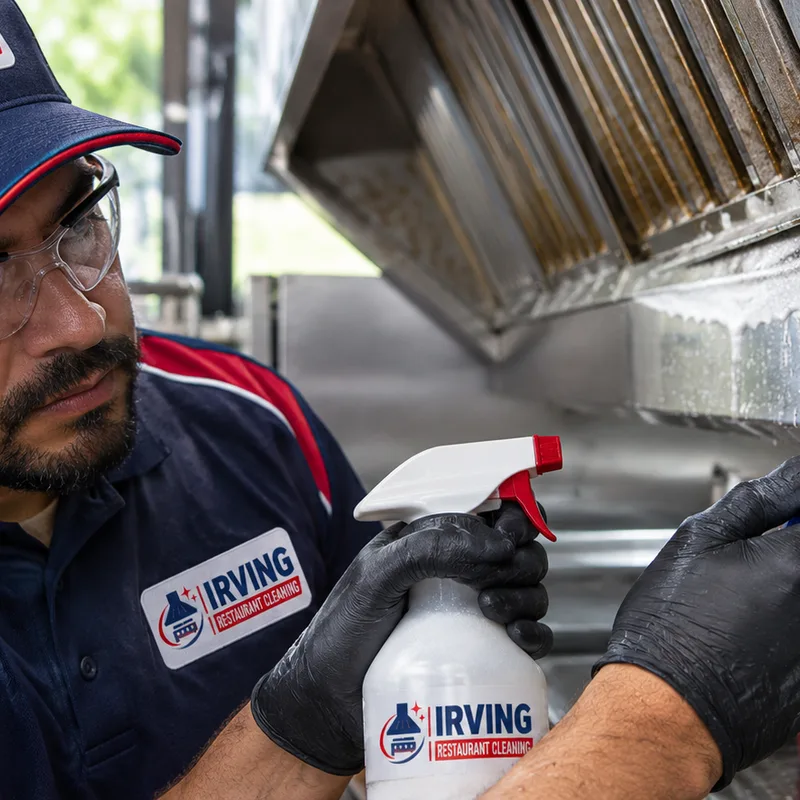
Close view of a technician using controlled hand tools and food-service cleaning products on stainless steel restaurant equipment while keeping controls dry
Equipment-specific methods help protect finishes, controls, seals, and food-contact components.
Cleaning process

How a Professional Cleaning Visit Works

  1. Step01

    Walk Through the Kitchen

    Management identifies the equipment, surfaces, operating constraints, known trouble spots, and areas handled by staff. The walkthrough also notes loading access, water access, floor drains, ventilation, and any property rules that affect scheduling.

  2. Step02

    Set the Scope and Responsibilities

    The written plan states what will be cleaned, what must be moved, and which exclusions apply. It should also identify who removes food, secures knives and smallwares, shuts down equipment, and confirms that surfaces are cool enough for service.

  3. Step03

    Prepare and Protect the Work Area

    Crews stage tools, post wet-floor controls, separate cleaning equipment by zone, and protect nearby food or sensitive components. Movable equipment is handled only when its weight, casters, utility connections, and clearance allow safe access.

  4. Step04

    Degrease, Agitate, and Rinse

    Soil is removed with the appropriate chemistry, dwell time, temperature, pressure, and mechanical action. Low-moisture methods are used near controls and connections, while washable floors and walls may receive controlled rinsing or extraction.

  5. Step05

    Sanitize and Complete a Final Check

    Applicable food-contact surfaces receive the required sanitizing step after cleaning and rinsing. The crew then checks edges, undersides, floors, and equipment placement with the designated manager before the kitchen returns to normal use.

Request a Callback
A restaurant cleaning crew staging floor equipment, warning signs, and protected tools during an after-hours commercial kitchen service in Irving
Dallas County operations

A Better Scope for Dallas County Restaurant Conditions

North Texas heat can increase the strain on busy kitchens, refrigeration equipment, and waste-handling areas. Grease also spreads quickly during high-volume cooking. A practical plan therefore gives frequent attention to cookline edges, floor routes, drain areas, and the accessible spaces around equipment rather than waiting for a single annual deep clean.

The City of Irving handles food establishment permitting and inspections within Irving. Cleaning does not replace required food-safety controls, employee practices, pest management, equipment repair, or regulatory compliance. It does give management a documented way to address physical buildup and maintain areas that routine shift cleaning may miss.

Scheduling matters as much as technique. A kitchen with a short overnight closure may need work divided into zones over several visits. A restaurant that closes one day each week may be able to complete a larger scope at once. Before work begins, management should confirm alarm procedures, building access, grease disposal rules, hot-water availability, and the time equipment must remain off or cool.

Request a Callback
Provider standards

What to Look for in a Restaurant Cleaning Provider

Ask for a scope that names the equipment and areas included rather than relying on broad terms such as “deep cleaning.” The document should state whether the crew will move equipment, clean removable parts, service floor drains, handle dining areas, or work around hood and suppression components. Exclusions matter because they show where another trade may be needed.

Discuss chemical selection and material compatibility. A knowledgeable provider should recognize the difference between cleaning, sanitizing, and disinfecting, and should follow product labels for dilution, dwell time, rinsing, and approved use. Safety Data Sheets should be available for workplace chemicals. The crew should also have a plan for wet floors, hot surfaces, sharp edges, and heavy equipment.

Finally, decide how the result will be checked. A manager walkthrough is more useful when the scope identifies specific surfaces and access limits. Photos can document areas hidden beneath or behind equipment, but they should supplement an inspection rather than replace one. For recurring service, written notes about changed conditions, damaged seals, loose casters, or inaccessible buildup help the restaurant arrange repair or maintenance with the correct vendor.

Request a Callback

Get a written cleaning scope built around your kitchen layout, operating hours, equipment materials, and highest-priority buildup.

Call for a Free Quote
Common questions

Restaurant Cleaning Dallas: Common Scheduling and Scope Questions

How much does restaurant cleaning cost in Dallas?+

Restaurant cleaning is priced by labor, scope, and kitchen condition rather than a dependable flat rate. The main cost drivers are square footage, grease and carbon buildup, equipment quantity, access beneath the cookline, required detail work, and whether service must occur within a short overnight window. A walkthrough at the Irving or Dallas County location allows the provider to confirm what is accessible and prepare an exact written quote.

How long does a commercial kitchen deep clean take?+

A commercial kitchen deep clean may take one shift or require several scheduled visits, depending on the scope. A compact kitchen with clear access can move faster than a high-volume cookline with fixed equipment and heavy buildup. In Las Colinas properties, building access and overnight security procedures may also affect setup time. The working window should be confirmed after an on-site walkthrough.

Can restaurant equipment be cleaned without moving it?+

Accessible equipment surfaces can often be cleaned in place, but hidden grease beneath and behind units may remain unreachable. Equipment should be moved only when its weight, casters, clearance, and utility connections allow it. Gas-connected, hard-wired, or fixed units may require a qualified technician before relocation. The scope should identify every unit that will remain stationary.

Do we need to shut down the kitchen before cleaning?+

The assigned work zone generally needs to be out of production, with equipment cool and food protected or removed. Some Dallas County restaurants divide work into zones so unaffected prep areas can remain closed off rather than shutting down the entire facility for an extended period. The safe arrangement depends on splash risk, chemical use, ventilation, and movement through the kitchen.

How often should professional restaurant cleaning be scheduled?+

The right frequency depends on cooking volume, menu, equipment, staffing, and the buildup found during inspection. Frying and charbroiling usually create different cleaning demands than a light-prep operation. Many kitchens combine daily employee tasks with weekly, monthly, and periodic professional work. The schedule should assign each surface a frequency instead of applying one interval to the entire restaurant.

Does restaurant equipment cleaning include hood and duct cleaning?+

Hood exteriors and accessible nearby surfaces may be included, but exhaust duct, fan, and fire-suppression work should be clearly separated in the scope. Commercial kitchen exhaust systems involve fire-safety requirements and specialized access. Restaurant management should verify that any provider handling those components has the qualifications, methods, and documentation required for that work.

What should staff do before the cleaning crew arrives?+

Staff should remove or secure food, knives, smallwares, personal items, and loose packaging from the assigned zones. Equipment should be shut down early enough to cool, and management should communicate alarm, access, parking, and building procedures. In mixed-use Irving properties, confirming loading access and after-hours entry before the visit helps protect the available cleaning window.

Plan your scope

Plan a Cleaner, More Manageable Kitchen

Tell Irving Restaurant Cleaning about your equipment, operating schedule, problem areas, and access limits. The next step is a clear scope that defines the work before service begins.