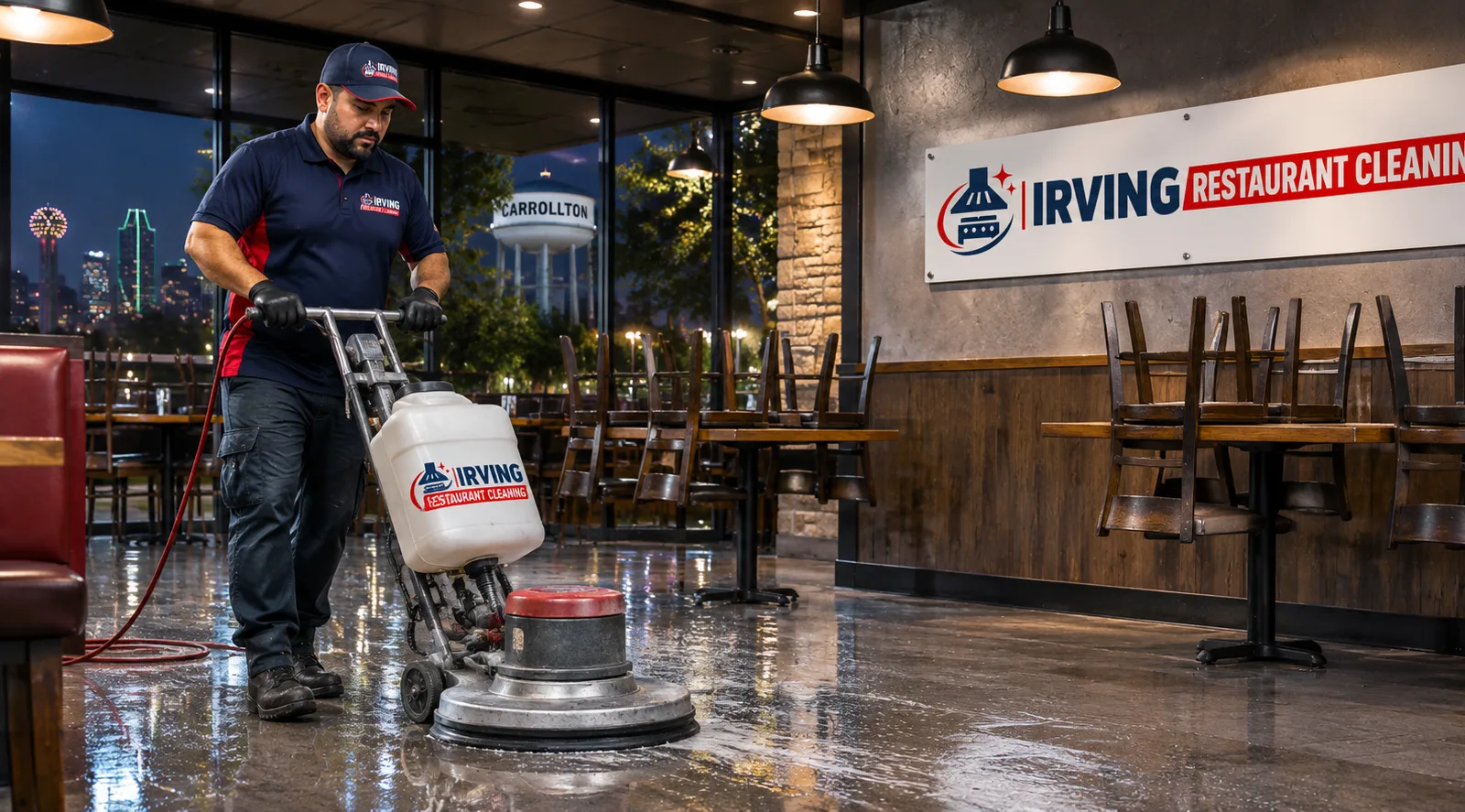
A professional cleaner using commercial equipment on the floor of a well-kept Carrollton restaurant after closing
Restaurant cleaning service in Carrollton

Restaurant Cleaning Carrollton

Detailed commercial cleaning built around your kitchen, dining room, floors, service schedule, and food-safety priorities.

Kitchen and prep areas
Dining and guest areas
Surface-specific floor care
Written cleaning scope
Commercial restaurant care

Reliable Cleaning for Working Restaurants

Restaurant Cleaning Carrollton requires more than a quick wipe-down after service. Grease travels beyond cooking surfaces, food debris collects beneath movable equipment, and dining-room floors show every spill and footprint. Irving Restaurant Cleaning provides planned commercial cleaning for restaurants that need consistent results without disrupting food preparation or guest service.

Our crews work from a written scope based on the facility, surfaces, operating hours, and division of duties. That matters because daily staff cleaning and contracted deep cleaning should complement each other rather than leave uncertain gaps. For nearby Carrollton facilities, we are restaurant experts across the Irving area who bring the same practical approach: define the tasks, choose methods that fit each surface, and schedule work during an agreed access window.

Carrollton restaurants near the President George Bush Turnpike and Interstate 35E may handle heavy lunch, dinner, takeout, or delivery traffic. High turnover brings repeated soil into entrances and dining rooms, while active kitchens build grease films around cook lines and prep areas. A site-specific plan accounts for that workload instead of applying the same checklist to every property.

Request a Callback
Cleaning zones

What Restaurant Cleaning Services in Carrollton Can Cover

A defined plan can coordinate high-soil kitchen work, customer-facing areas, floors, restrooms, and periodic detail tasks.

Request a Callback

Commercial Kitchen Cleaning

Degreasing for compatible cook-line surrounds, backsplashes, walls, washable equipment exteriors, prep-area surfaces, and floors. Crews follow the agreed scope and avoid dismantling or servicing appliances unless that work is specifically authorized.

Dining and Guest Areas

Cleaning can include tables, chair bases, booths, partitions, ledges, doors, interior glass, host stations, and other touchpoints. Methods are selected for the actual finish, including sealed wood, laminate, metal, glass, or upholstery.

Floor Care

Programs may include sweeping, vacuuming, mopping, machine scrubbing, and attention to edges or corners. Quarry tile, resilient flooring, sealed concrete, and carpet require different chemistry, tools, and drying procedures.

Restrooms and Employee Areas

Fixtures, partitions, dispensers, mirrors, touchpoints, break areas, and locker areas can be included. Restroom tools should remain separated from kitchen and dining-area tools to reduce cross-contamination risks.

Waste and Detail Work

Cleaning around waste stations, beneath movable items, along baseboards, and behind accessible fixtures addresses buildup that routine shift work may miss. Access limits are documented before the job starts.

Recurring or Deep Cleaning

Service can be structured as recurring maintenance, periodic detail work, or a focused reset before an inspection, opening, management change, or especially busy operating period.

Food-safety coordination

A Kitchen Plan Built Around Food-Safety Practices

A restaurant cleaning scope should distinguish cleaning from sanitizing. Cleaning removes grease, soil, and food residue. Sanitizing follows on cleaned food-contact surfaces using an approved product at the label concentration and required contact time. Applying sanitizer over visible soil does not replace cleaning.

Crews also need to control cross-contamination. Color-coded cloths and tools can separate restrooms, dining spaces, and back-of-house areas. Chemicals should be labeled, stored away from food, and used according to the manufacturer's directions. Safety Data Sheets provide handling and hazard information for workplace products.

The Texas Department of State Health Services publishes the Texas Food Establishment Rules, while local regulatory responsibility can depend on the facility's location and jurisdiction. Contracted cleaning supports a restaurant's sanitation program, but it does not replace management controls, employee procedures, pest control, equipment maintenance, or regulatory inspections.

Commercial exhaust hood and duct cleaning is also a distinct specialty. Routine surface degreasing around a cook line should not be confused with cleaning the internal hood, filters, fans, and duct system to the applicable fire-safety standard. If that work is needed, it should be separately identified and performed by a qualified provider.

Request a Callback
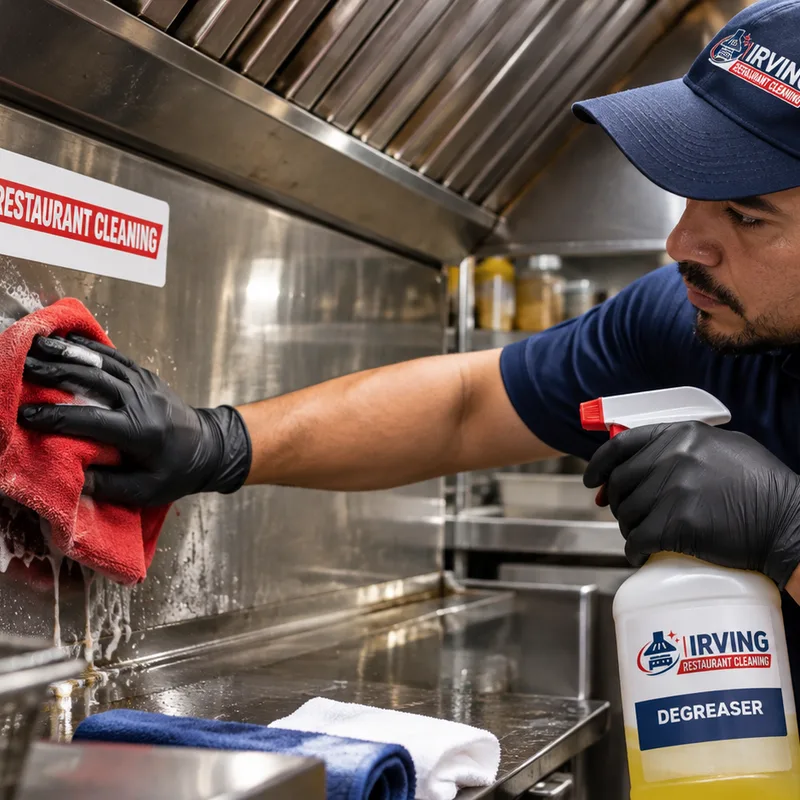
A trained restaurant cleaner degreasing a stainless steel backsplash and accessible equipment exteriors with labeled commercial products and color-coded cloths
Labeled products and separated tools help crews match the method to the surface and cleaning zone.
Cleaning process

How We Build a Practical Restaurant Cleaning Plan

  1. Step01

    Walk Through the Facility

    We review the kitchen, dining room, restrooms, entrances, employee spaces, floors, and accessible waste areas. The walkthrough identifies surface materials, grease levels, traffic patterns, fragile finishes, and areas that require restricted access.

  2. Step02

    Define the Scope

    The written scope states what will be cleaned, how often it will be addressed, and what is excluded. It also clarifies whether restaurant staff will move equipment, clear prep surfaces, secure food, or handle closing duties before the crew arrives.

  3. Step03

    Set the Service Window

    Timing is coordinated around operating hours, deliveries, prep work, and opening procedures. The plan should allow enough time for cleaning, required chemical dwell time, floor drying, a final review, and safe reopening of work areas.

  4. Step04

    Perform and Check the Work

    The crew follows the task list with tools and products suited to each area. A final check looks at high-priority surfaces, corners, floor edges, accessible areas beneath equipment, touchpoints, and any concerns documented during service.

  5. Step05

    Adjust the Frequency

    Recurring plans can change as traffic, menus, seasons, or operating hours change. A kitchen with frequent frying may need more degreasing, while a dining room with carpet may need scheduled extraction in addition to routine vacuuming.

Request a Callback
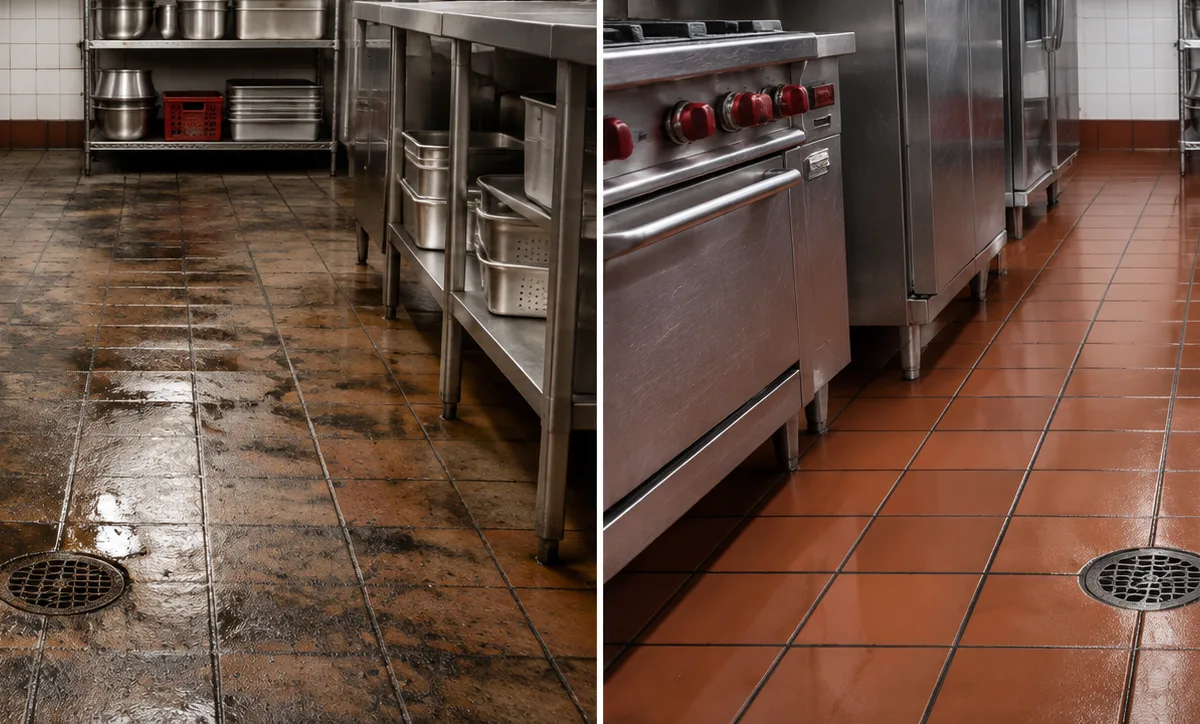
A split view of a greasy commercial kitchen tile floor before cleaning and the same floor after machine scrubbing, with no people or food present
Mechanical agitation and soil recovery can reach textured tile and grout more effectively than routine flat mopping.
Surface-specific methods

Floor Care That Fits the Surface and Workload

Restaurant floors are exposed to tracked-in grit, beverage spills, food particles, cooking oils, and repeated chair or cart movement. The cleaning method must match both the floor and the soil. A greasy kitchen floor may require a compatible degreaser, controlled dwell time, agitation, soil recovery, and a clean-water rinse. Simply spreading dirty solution with a mop can leave residue behind.

Dining-area floors have different concerns. Carpet needs regular vacuuming plus periodic extraction based on traffic and drying conditions. Resilient flooring may need neutral cleaning to protect its finish. Grout lines and textured tile often require mechanical agitation because soil settles into low points that flat mops cannot reach effectively.

North Texas rain and wind can increase moisture and tracked soil at entrances, while dry periods bring fine dust. Entry matting, prompt spot cleaning, and attention to transition areas help control what reaches the dining room. Service timing should also account for drying. Wet-floor controls remain in place until the surface is ready for normal use.

Request a Callback
Defined restaurant scope

Why Carrollton Restaurants Choose a Defined Scope

Cleaning proposals are easier to compare when each provider is pricing the same work. A useful scope identifies service frequency, square footage or zones, floor types, equipment-access limits, consumable responsibilities, chemical restrictions, and the condition expected at handoff. It should also state how missed items or access problems will be reported.

Ask whether the crew is prepared for restaurant work rather than general office cleaning. Food facilities involve grease, wet floors, sensitive surfaces, stored ingredients, sharp equipment edges, and strict separation between sanitary zones. Confirm how tools are segregated, how chemicals are labeled, and who supervises the final check.

Restaurants operating late hours should discuss key control, alarm procedures, lighting, locked storage, and the person authorized to approve changes. Clear instructions reduce interruptions for managers and give cleaners enough time to finish before prep crews arrive. Irving Restaurant Cleaning can prepare a scope based on the actual facility rather than an assumed package.

Request a Callback

A walkthrough can turn recurring trouble spots, closing-time constraints, and surface concerns into a clear cleaning plan for your restaurant.

Call for a Free Quote
Common questions

Restaurant Cleaning Carrollton FAQs

How much do restaurant cleaning services in Carrollton cost?

Restaurant cleaning is usually priced after a facility walkthrough because labor needs vary widely by scope. The main cost drivers are kitchen and dining-room size, grease buildup, floor materials, service frequency, access beneath equipment, restroom count, operating hours, and whether the first visit requires restorative work. A written proposal should separate recurring tasks from periodic deep cleaning so Carrollton operators can compare like-for-like scopes.

Can cleaning be scheduled after the restaurant closes?

Yes, after-hours cleaning can usually be planned around closing, delivery, and morning prep schedules. The agreed window must include access, chemical contact time, floor drying, inspection, and secure departure. Restaurants near Carrollton's major commuter corridors may have late service or early deliveries, so exact entry and handoff procedures should be set before work begins.

How often should a commercial restaurant receive professional cleaning?

The right frequency depends on volume, menu, layout, floor type, and the tasks handled by employees each shift. Grease-producing kitchens may require frequent back-of-house attention, while grout, carpet extraction, high dusting, and detailed work beneath movable equipment can follow periodic schedules. A walkthrough identifies where daily, weekly, or less frequent work fits the operation.

Do restaurant cleaning services include exhaust hoods and ducts?

Internal exhaust hood, fan, and duct cleaning should be treated as a separate specialized scope. General restaurant cleaning may cover accessible exterior surfaces and nearby grease residue, but it does not automatically include the complete exhaust system. Carrollton operators should confirm who performs that work and whether the provider is qualified for the applicable fire-safety requirements.

Do we need to move food or equipment before the crew arrives?

Food should be covered or secured, and prep surfaces should be cleared according to the agreed plan. Restaurant staff may also need to shut down equipment, allow it to cool, and move approved wheeled items. Cleaners should not move gas-connected, hardwired, excessively heavy, or unsafe equipment unless proper arrangements have been made in advance.

Can you clean without damaging stainless steel, sealed wood, or specialty floors?

Yes, the method should be selected after identifying the surface, finish, soil, and manufacturer restrictions. Stainless steel may be scratched by aggressive abrasives, sealed wood can be harmed by excess moisture, and some resilient floors react poorly to high-pH products. Testing an inconspicuous spot and following product labels helps protect restaurant finishes.

How quickly can a new cleaning program begin?

The start date depends on walkthrough availability, scope approval, access arrangements, and the condition of the restaurant. A straightforward recurring plan may require less setup than a heavily soiled kitchen needing an initial deep clean. The first visit should be scheduled with enough time to complete the defined work rather than forcing it into an unrealistic closing window.

Plan your scope

Plan a Cleaner, More Consistent Restaurant

Tell Irving Restaurant Cleaning about your Carrollton facility, operating schedule, floor types, and priority areas. We will help define the work and prepare a practical service scope.