
Dining Areas
Tables, chair surfaces, booths, ledges, doors, entrance glass, and reachable touchpoints are cleaned according to the written scope. Floors may be vacuumed, swept, damp mopped, or machine scrubbed based on the material and soil level.
Serving Irving, Dallas County, Texas & surrounding areas
Open 24/7
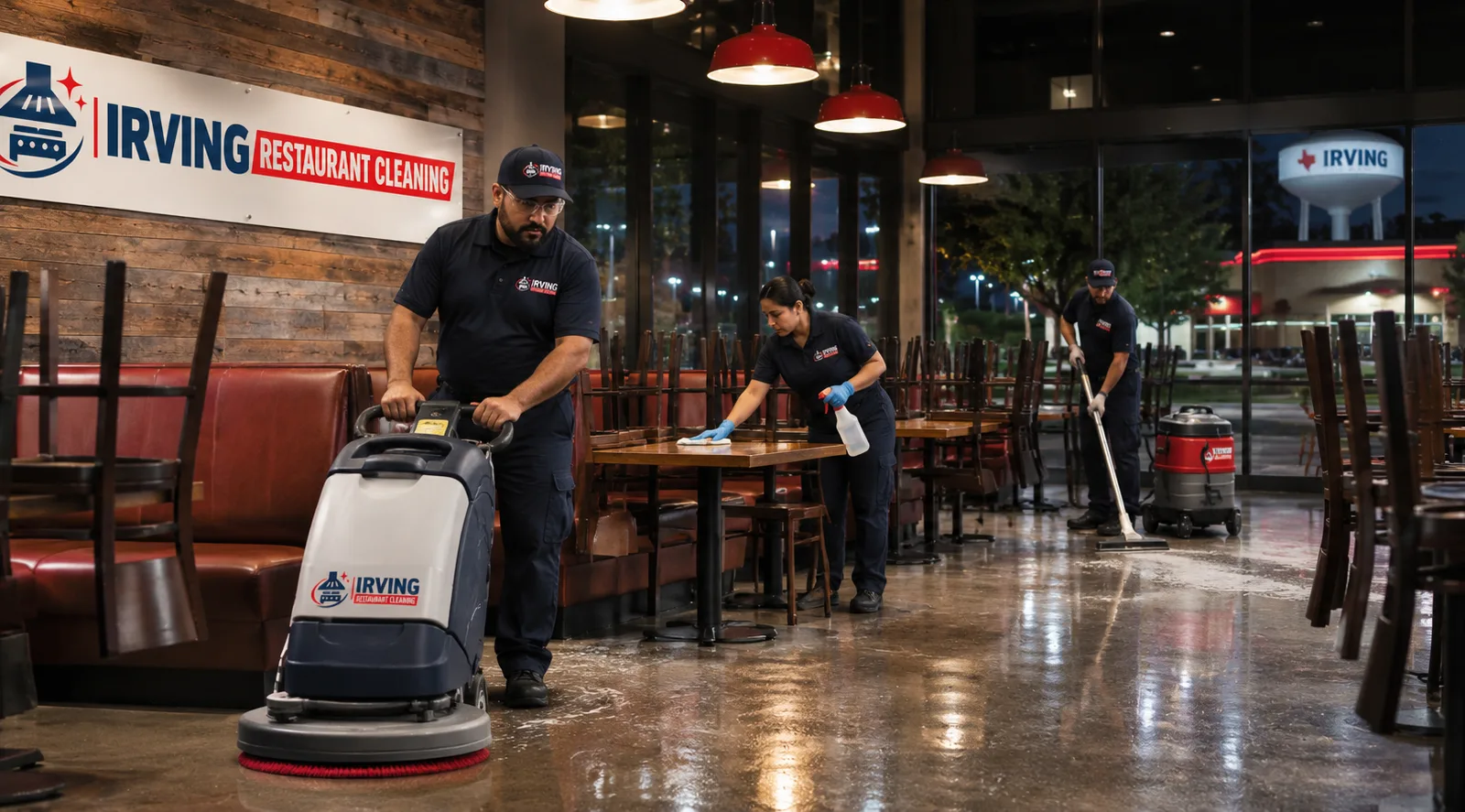
Walk into a clean kitchen, dining room, and restroom each morning with a recurring scope built around your closing schedule.
Overnight Restaurant Cleaning puts routine janitorial work outside operating hours, when crews can move through guest and staff areas without interrupting service. Irving Restaurant Cleaning builds nightly scopes around the restaurant's layout, closing routine, busiest days, and required opening condition.
Before recurring work begins, Irving's trusted restaurant team coordinates access, alarm instructions, key priorities, and completion expectations. The goal is a repeatable handoff: your closing staff finish their assigned duties, our cleaners complete the agreed janitorial scope, and the opening team arrives to spaces that are ready for normal setup.
Local restaurants can face late closing times, heavy weekend traffic, and soil tracked in from parking lots during wet weather. Properties near Las Colinas often need schedules that account for offices, hotels, and event-related demand. Restaurants around the Irving Mall commercial area may experience concentrated evening and weekend traffic, while establishments near the Toyota Music Factory can see demand tied to performances. A written task list keeps restaurant night cleaning consistent when business volume changes.
Each area receives a defined method, frequency, and boundary so the nightly handoff remains consistent.
Request a Callback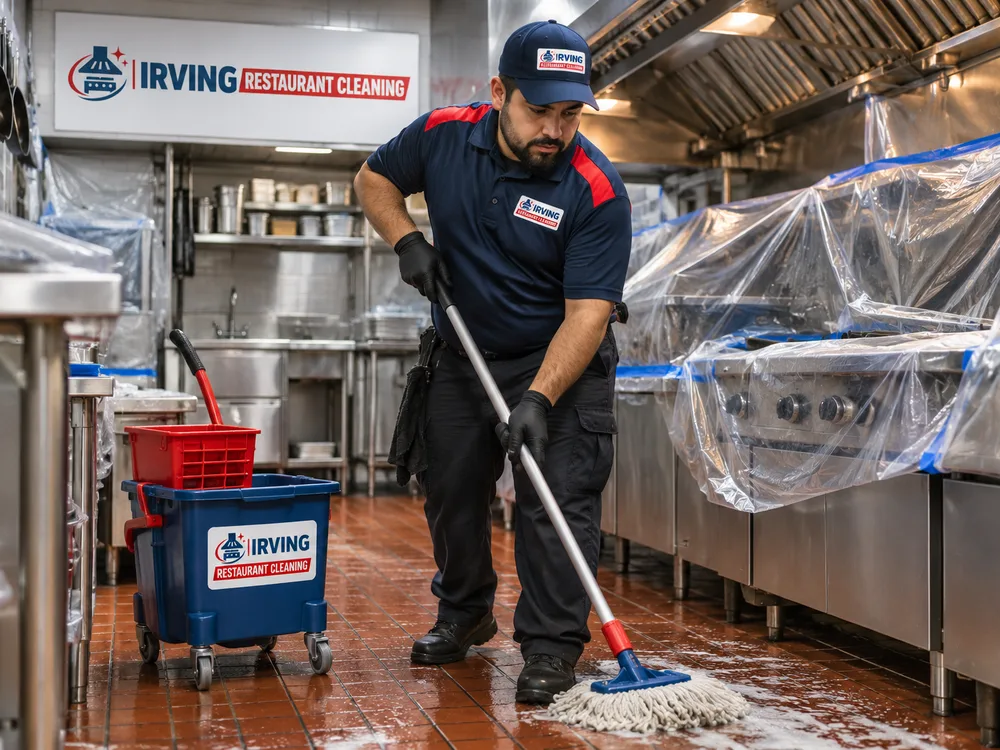
A restaurant contains several cleaning environments under one roof. Dining rooms need careful floor and touchpoint work. Restrooms require separate tools and disinfectant procedures. Back-of-house areas collect grease, food debris, and packaging residue. The scope should identify each area, the expected frequency, and any exclusions.
Typical nightly work may include removing accessible waste, replacing liners, wiping tables and seating, cleaning entrance glass, dusting ledges, spot-cleaning doors, vacuuming carpet, and mopping hard floors. Back-of-house janitorial tasks can include sweeping and degreasing accessible floors, wiping approved exterior surfaces, cleaning sinks when included, and removing debris from reachable areas. Equipment disassembly, hood and duct cleaning, pest control, and deep cleaning inside hot equipment require separate planning and are not assumed to be part of a standard janitorial visit.
Color-coded microfiber cloths and mop heads help prevent restroom tools from being used in dining or kitchen areas. Cleaners should also follow product labels, observe required disinfectant dwell times, and post wet-floor signs while floors remain damp.
Tables, chair surfaces, booths, ledges, doors, entrance glass, and reachable touchpoints are cleaned according to the written scope. Floors may be vacuumed, swept, damp mopped, or machine scrubbed based on the material and soil level.
Fixtures, counters, mirrors, partitions, dispensers, touchpoints, and floors receive a dedicated restroom process. Consumables can be restocked when the restaurant supplies them and includes restocking in the agreement.
Loose debris is removed before the floor is cleaned with a product appropriate for grease and the installed surface. Corners, edges, and accessible spaces under movable items can be assigned at nightly or rotating frequencies.
Accessible interior containers are emptied and relined, with waste taken to the property's designated collection point. Cardboard handling and exterior enclosure cleanup should be specified separately when needed.
Door glass, handles, host areas, pickup counters, and floor zones can be included because they shape the first impression at opening and often collect fingerprints or tracked-in soil.
Baseboards, wall spots, floor edges, vents, high dusting, and other periodic tasks can rotate through a weekly or monthly calendar instead of being left to memory.
We review floor types, dining capacity, restroom count, back-of-house access, waste procedures, closing times, and any areas that require special handling. Existing trouble spots are identified before pricing.
The written plan separates nightly duties from rotating detail work. It also records exclusions, supply responsibilities, access instructions, and the condition expected before the crew leaves.
Managers provide approved entry procedures, alarm directions, lock-up requirements, and an escalation contact. Cleaning begins after guests and closing staff have cleared the assigned work zones.
Crews generally remove debris and clean higher surfaces before finishing floors. Restroom equipment remains segregated, and wet-floor controls stay in place while surfaces dry.
Feedback from opening managers is used to correct missed details and adjust task frequencies. Seasonal traffic, menu changes, or extended hours may justify a revised schedule.
A workable schedule accounts for more than the posted closing time. Guests may remain after the kitchen slows down, employees still need to complete cash-out and food-storage duties, and delivery activity can continue near entrances. The cleaning start time should reflect when each work zone is actually available.
Las Colinas restaurants may need adaptable service around corporate functions, hotel activity, and events at the Toyota Music Factory. Free-standing restaurants along major commercial corridors can have large entrance and kitchen-floor soil loads after busy shifts. Near Dallas Fort Worth International Airport, late operating hours and irregular travel demand may require a later or tightly controlled service window. These conditions affect staffing and access rather than the basic cleaning standard.
North Texas weather also matters. Spring storms can increase tracked-in water and grit, while dry periods can add dust around entrances. Entry mats, frequent soil removal, and the correct floor process help keep that material from spreading into dining areas.
Choose a company that will put the scope in writing and define what happens every night, weekly, and periodically. Broad promises such as “clean the kitchen” leave room for disagreement. A useful scope names surfaces, floor methods, restroom duties, waste handling, supply responsibilities, exclusions, and the process for reporting a problem.
Ask how cleaners prevent cross-contamination between restrooms and food-service areas. Separate, color-coded tools are a practical control. Product selection also matters. A cleaner removes soil, while a disinfectant is used according to its label and needs the stated contact time. Food-contact surfaces require products and procedures suitable for those surfaces, including any required rinse step. Restaurant management remains responsible for its food-safety program and employee closing duties.
Reliable recurring restaurant cleaning also depends on communication. There should be a clear method for documenting locked rooms, damaged dispensers, active leaks, heavy spills, pest evidence, or an area that could not be safely reached. Quality checks should compare completed work against the agreed task list rather than relying only on a quick visual impression.
Recurring overnight restaurant cleaning in Irving typically costs about $0.10 to $0.30 per square foot per visit, while smaller locations may be priced at a minimum of roughly $150 to $350 per visit. These are general estimates, not a quote. Final pricing depends on floor area, service frequency, restroom count, kitchen grease levels, floor materials, closing time, access, waste handling, and the difference between routine janitorial work and periodic deep cleaning. The exact cost is confirmed after an on-site walkthrough and written scope.
Request a CallbackGet a written nightly scope that matches your closing routine, floor types, restrooms, and opening expectations.
Call for a Free QuoteYes, service can often begin after the last guests leave and assigned areas are released by the closing manager. The actual start time must account for cash-out, food storage, employee departure, alarm procedures, and late activity. Restaurants near the Toyota Music Factory or Dallas Fort Worth International Airport may need flexible windows because operating demand can continue late.
Daily restaurant cleaning commonly includes dining-room surfaces, accessible touchpoints, entrance glass, floors, interior waste, and restrooms. Back-of-house floors and approved exterior equipment surfaces may also be included. The agreement should state whether the crew handles liners, consumable restocking, cardboard, sinks, floor drains, or areas under movable equipment.
Cleaning can overlap with closing duties only when separate work zones are available and the restaurant approves the workflow. Crews should not work around active cooking, create wet-floor hazards in occupied paths, or interfere with food storage. A zone-by-zone release plan is safer than assuming the entire kitchen becomes available at once.
Restaurant restrooms should receive a complete cleaning during every scheduled overnight visit, with staff handling checks and spot service during operating hours as needed. A full routine normally addresses toilets, urinals, sinks, counters, mirrors, partitions, dispensers, touchpoints, waste, and floors. Event-driven demand in Las Colinas may justify additional operating-hour checks by restaurant staff.
No, those tasks are usually outside a standard restaurant janitorial scope unless they are specifically inspected, priced, and assigned. Exhaust hood and duct work is specialized, and equipment interiors may require shutdown, cooling, disassembly, or manufacturer-specific procedures. The written scope should distinguish routine exterior wiping and floor care from specialized kitchen deep cleaning.
Nightly service is usually the practical choice for restaurants that operate daily and need guest areas, restrooms, waste containers, and floors reset before opening. A restaurant with limited operating days may use service only after open shifts. Weekly detail tasks can supplement the routine, but they do not replace cleaning needed after food service.
A start date can be set after the walkthrough, scope approval, access planning, and crew scheduling are complete. The timing depends on restaurant size, required frequency, operating hours, and whether the location needs an initial deep clean before routine service. Irving locations with complex building access or shared waste areas may require additional coordination with property management.
Supply responsibility is decided in the service agreement before work begins. Restaurants often provide guest consumables such as toilet tissue, paper towels, and hand soap, while the janitorial company provides routine cleaning tools and chemicals. Liners, specialty floor products, and dispenser refills should be listed individually so opening staff know what will be stocked.
Tell Irving Restaurant Cleaning about your operating hours, floor plan, restrooms, and current trouble spots. We will outline a practical recurring scope and confirm pricing after reviewing the restaurant.