
Guest-facing fixtures
Toilets, urinals, sinks, counters, mirrors, partitions, doors, and dispensers are addressed according to the agreed task list.
Serving Irving, Dallas County, Texas & surrounding areas
Open 24/7
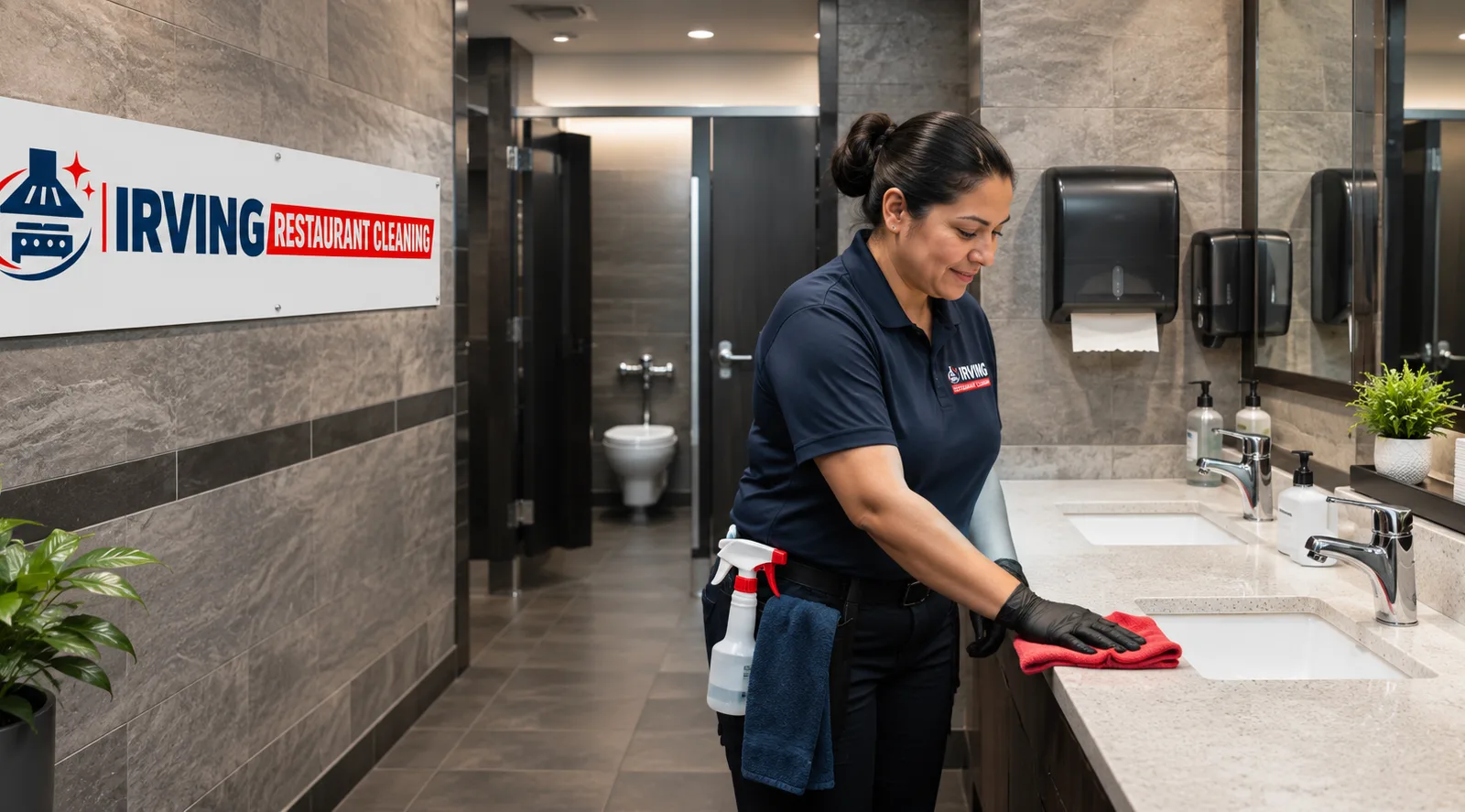
Give guests a clean, stocked restroom while your staff stays focused on food, service, and the dining room.
Restaurant Bathroom Cleaning Grand Prairie should address the details guests notice immediately: odors, fingerprints, soap residue, overflowing waste bins, empty dispensers, and wet floors. Irving Restaurant Cleaning creates a practical scope around your operating hours, restroom traffic, fixture count, and sanitation needs. The goal is a restroom that is ready for guests without disrupting dining service.
Working from Irving, Irving's restaurant specialists provide focused restroom cleaning for Grand Prairie food-service businesses. We can coordinate service before opening, after closing, or during an agreed low-traffic period. A written scope identifies the rooms, fixtures, surfaces, consumable responsibilities, and scheduled tasks so managers know what is included.
Grand Prairie restaurants serve traffic generated by several distinct commercial areas. Businesses near Grand Prairie Premium Outlets may experience concentrated restroom use around shopping periods. Restaurants close to EpicCentral can see demand tied to dining, entertainment, and events. Along the Interstate 30 and State Highway 360 corridors, highway access and changing customer volume can make dependable scheduling especially useful. These conditions influence service timing and task frequency, so the plan should reflect the restaurant rather than a generic checklist.
A proper visit starts with soil removal. Technicians empty waste containers, remove loose debris, and clean high-touch points such as door handles, stall latches, flush controls, faucet handles, and dispenser surfaces. Toilets and urinals receive bowl or basin cleaning, exterior wiping, and disinfection with attention to rims, seats, hinges, partitions, and nearby walls. Sinks, counters, mirrors, and exposed plumbing are cleaned according to their material and condition.
Floors require more than a quick pass. Corners, edges, grout lines, and the areas behind toilets can retain residue and odor. The crew uses a floor method suited to the surface, then leaves it as dry as practical before reopening the room. Stainless steel, chrome, coated partitions, stone, tile, and other finishes may need different products to avoid dulling or damage.
Cleaning and disinfecting are separate steps. Visible soil can interfere with a disinfectant, so surfaces are cleaned first when needed. The disinfectant must remain wet for the label's stated contact time. Products should never be mixed, and any food-service establishment should maintain clear chemical labels and Safety Data Sheets for workplace use.
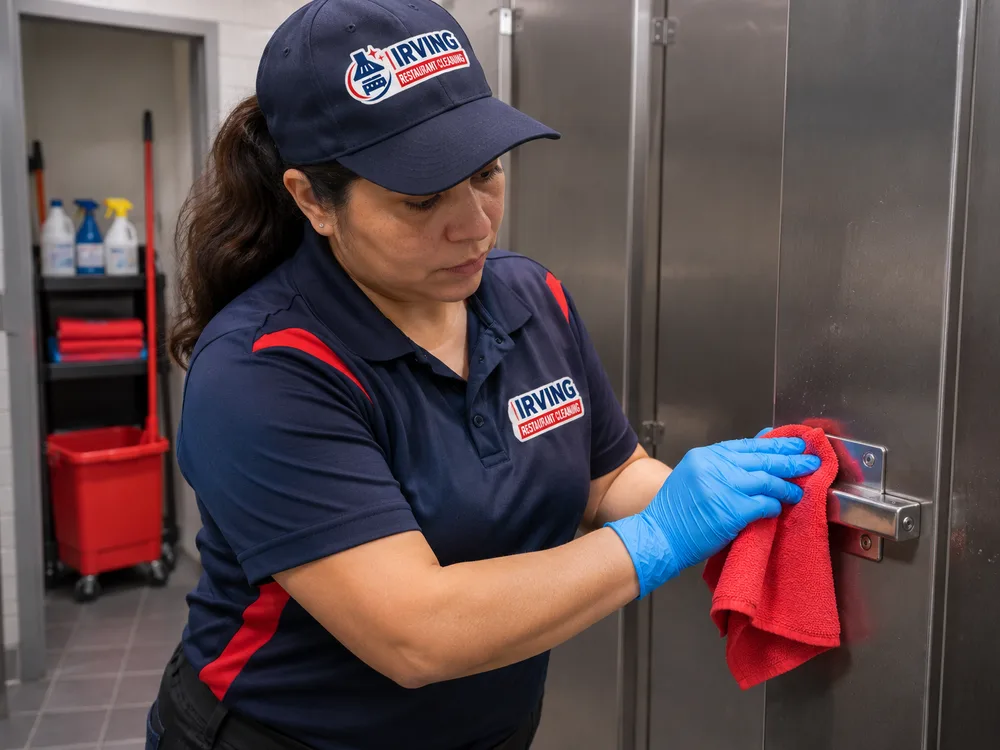
Toilets, urinals, sinks, counters, mirrors, partitions, doors, and dispensers are addressed according to the agreed task list.
Handles, latches, flush controls, faucets, and dispenser contact points are cleaned and disinfected with the correct contact time.
The work targets residue in bowls, around bases, along floor edges, and near waste containers instead of relying on fragrance to cover odors.
Loose debris, tracked soil, splash residue, and buildup along edges are removed using methods appropriate for the installed floor.
Soap, tissue, paper products, and liners can be checked and replenished when supplies and responsibilities are included in the written scope.
Service can be planned around opening, closing, deliveries, and peak dining periods to reduce contact between guests and cleaning activity.
We review the number of guest and employee restrooms, fixture counts, surface materials, current condition, access requirements, and periods of heavier use.
The written plan separates visit-by-visit duties from periodic detail work. It can also state who provides consumables and how supply shortages or maintenance concerns are reported.
Managers identify entry procedures, alarm or key arrangements, restricted areas, and the safest service window. Wet-floor controls and temporary restroom closure procedures are agreed in advance.
The crew removes waste and soil, works from cleaner areas toward more contaminated fixtures, uses color-coded tools where appropriate, and follows product-label directions.
Fixtures, floors, mirrors, waste bins, dispensers, odors, and touchpoints receive a final check. Leaks, damaged dispensers, recurring backups, or other repair needs can be reported to management.
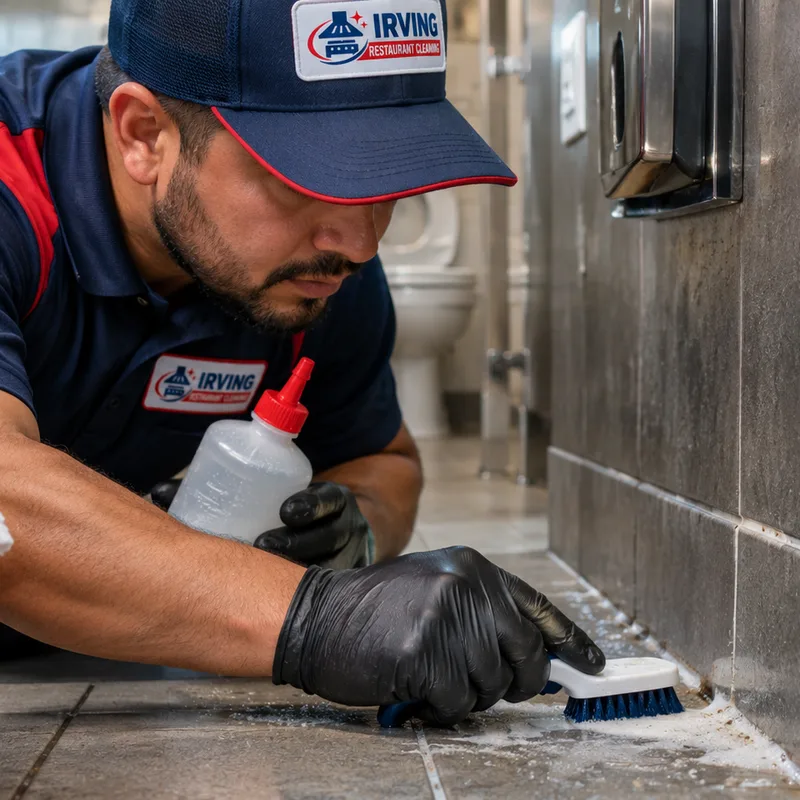
Daily or recurring restroom care handles the conditions that return quickly: waste, fingerprints, splash marks, paper debris, fixture soil, and supply checks. Periodic detail cleaning addresses buildup that routine visits may not fully remove. Depending on the restroom, this can include machine scrubbing suitable floors, detailing grout and edges, cleaning partition hardware, removing mineral residue with a compatible product, and washing walls near high-splash areas.
Frequency depends on use, not just restaurant size. A compact counter-service location with continuous traffic may require more attention than a larger dining room with steadier restroom use. Weekend demand, nearby events, late operating hours, and patio or bar service may also affect the plan. Management should still assign staff to inspect restrooms between professional visits, especially for spills, empty dispensers, plumbing problems, or immediate hazards.
Restroom cleaning is one defined part of a broader sanitation plan. If the dining room, entry, floors, and other guest areas also need scheduled attention, restaurant cleaning in Grand Prairie can be scoped separately without blurring responsibilities for the bathrooms.
A clear plan protects consistency. It should state which restrooms are included, how often service occurs, what is done during every visit, and which tasks are periodic. It should also define whether the restaurant or cleaning provider supplies toilet tissue, hand towels, soap, liners, and dispensers. This prevents a clean room from opening with an empty soap unit or missing paper products.
Restroom cleaning also requires practical safety controls. Wet-floor signs should remain in place while floors are damp. Tools used around toilets should be separated from those used on sinks and other lower-risk surfaces. Chemical containers need readable labels, and products must be used at their labeled dilution and contact time. Bleach and ammonia products must never be combined because the reaction can produce dangerous gas.
Sanitation cannot correct a plumbing or building defect. Persistent sewer odor, slow drains, rocking toilets, leaking supply lines, failed exhaust fans, loose grab bars, or damaged dispensers need repair. A cleaning crew should identify visible concerns promptly so restaurant management can send them to the appropriate maintenance professional.
A walkthrough can turn recurring restroom problems into a written scope with suitable timing, task frequency, and supply responsibilities.
Call for a Free QuotePricing is usually based on restroom count, fixture count, service frequency, current condition, and the time window available. Heavy buildup, grout detailing, consumable restocking, after-hours access, and several visits per week can change the price. A walkthrough of the Grand Prairie location is the most reliable way to confirm a written rate and task list.
Yes, service can be arranged for an agreed period before opening, after closing, or during a predictable low-traffic window. The best choice depends on operating hours, access procedures, alarm requirements, and nearby residential considerations. Restaurants near Grand Prairie entertainment and shopping destinations may benefit from timing that accounts for event or weekend traffic.
The right frequency depends on guest volume, hours, fixture count, and how often employees inspect the room between visits. A restroom with steady counter-service traffic may need professional care more often than a reservation-based dining room with shorter hours. The schedule should be reviewed when operating hours or customer patterns change.
Employee restrooms can be included when they are identified in the scope and access is authorized. Their fixtures, floors, touchpoints, waste containers, and dispensers can follow the same defined process, while staff storage or restricted areas remain outside the scope unless specifically approved.
Restocking can be included, but the written agreement should identify who purchases and stores each consumable. Toilet tissue, hand towels, soap, waste liners, and sanitary disposal liners vary by dispenser model and restaurant preference. Documenting the approved products prevents incompatible refills and supply gaps.
Cleaning can remove many odors caused by fixture soil, waste, splash residue, dirty grout, and buildup around toilet or urinal bases. Odors that return quickly may indicate a dry drain trap, leak, failed seal, drain issue, or ventilation problem. Those conditions require inspection and repair rather than added fragrance.
The plan is designed to reduce disruption by establishing access times, temporary closure procedures, and wet-floor controls. For occupied restaurants, management and the cleaning crew should agree on how a restroom is taken out of service and reopened. Floors should be left as dry as practical before guests return.
Tell Irving Restaurant Cleaning about your Grand Prairie location, operating hours, restroom layout, and current concerns. We will use those details to discuss a practical scope and service schedule.