
Cooking-Line Cleaning
Degreasing accessible exteriors and agreed removable parts on ranges, ovens, fryers, griddles, broilers, and adjacent stainless steel. Heavy carbon deposits may require dwell time and repeated agitation.
Serving Irving, Dallas County, Texas & surrounding areas
Open 24/7
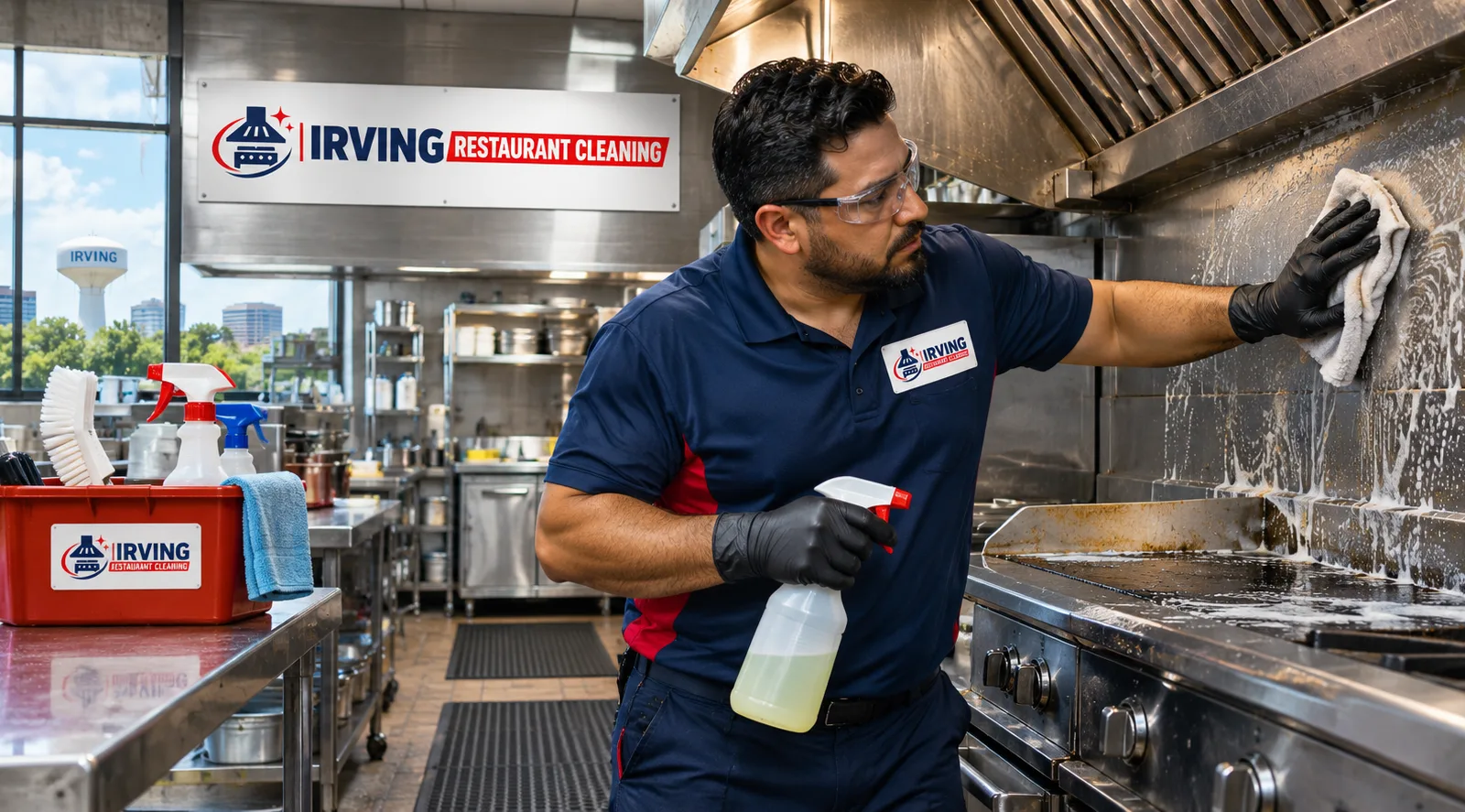
Detailed cleaning for restaurant equipment, food-preparation areas, floors, walls, and other hard-working surfaces, scheduled around your operation.
Kitchen Cleaning Services address the grease, carbon, food residue, and soil that routine shift cleaning can leave behind. Irving Restaurant Cleaning develops a practical scope for each facility, whether the job calls for periodic detail work or a full Commercial Kitchen Deep Cleaning. The focus stays on accessible cooking equipment, preparation areas, sinks, floors, walls, shelving, and other agreed surfaces.
Every kitchen operates differently. Equipment layout, menu, production volume, floor condition, access, and available shutdown time all shape the work. As an experienced restaurant team in Irving, we review those conditions before setting the cleaning plan, so crews arrive with a clear task list and understand which areas must be ready first.
Our location on N Rogers Road gives us practical access to Irving's restaurant corridors. Kitchens near the Irving Convention Center may need work coordinated around events and evening traffic. Las Colinas restaurants often have narrow service windows in mixed-use and office settings. In Valley Ranch, neighborhood dining patterns can make late-night or off-day scheduling more practical. Near Dallas Fort Worth International Airport, extended operating hours may require the job to be divided into controlled work zones.
The scope can focus on the equipment and surfaces carrying the heaviest soil load while respecting access, materials, and operating needs.
Request a CallbackDegreasing accessible exteriors and agreed removable parts on ranges, ovens, fryers, griddles, broilers, and adjacent stainless steel. Heavy carbon deposits may require dwell time and repeated agitation.
Detail cleaning for mixers, slicers, prep tables, carts, shelving, sinks, and other food-production equipment included in the written scope. Sensitive controls and electrical components receive method-appropriate care.
Soil is loosened along edges, beneath movable equipment, around legs, and at wall-floor transitions. Cleaning methods are selected for the floor material, finish, drainage, and slip risk.
Accessible counters, shelving, splash zones, and agreed storage surfaces are cleaned in a planned sequence. Food, utensils, and loose inventory must be protected or removed before work begins.
High-soil areas receive a suitable commercial degreaser, adequate dwell time, mechanical agitation, and recovery of loosened residue. The product and process must match the surface.
Recurring plans can rotate labor-intensive tasks instead of forcing every item into one shutdown. The schedule is based on soil load, operating hours, and the kitchen's own sanitation procedures.
A useful cleaning plan begins with operations. We identify when the cooking line cools, which equipment can be moved, where water may be used, and when the kitchen must return to production. Work can then be organized by zone so completed surfaces are not contaminated by later tasks.
Before cleaning starts, equipment is shut down and cooled according to the operator's procedures. Food and food-contact items are removed or protected. Crews then dry-remove loose debris, apply the appropriate chemistry, allow the required dwell time, agitate deposits, and recover residue. Surfaces are rinsed or wiped as the product label and surface require. Food-contact surfaces are left ready for the restaurant's required sanitizing step before use.
Commercial kitchen cleaning is separate from exhaust-system cleaning. Interior hood plenums, fans, and ductwork require specialized access and should be handled under an appropriate exhaust-cleaning scope. Pest treatment, equipment repair, drain repair, and hazardous-material remediation also fall outside standard Restaurant Kitchen Cleaning unless specifically arranged with qualified providers.
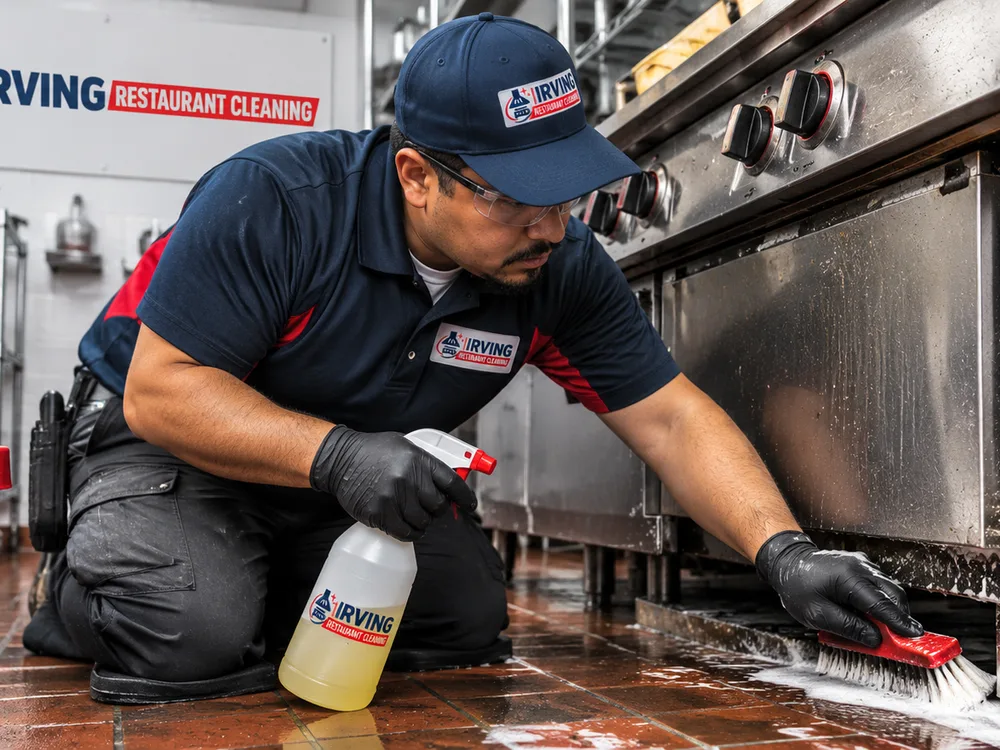
We review the cooking line, prep zones, floor surfaces, access points, movable equipment, utilities, drainage, and the time available before production resumes.
The proposal identifies included areas, exclusions, equipment-access responsibilities, scheduling, and any preparation the restaurant must complete. This keeps priorities clear before the crew arrives.
The operator shuts down and cools equipment as required, removes exposed food, and secures sensitive items. The crew stages tools and protects adjacent areas that are outside the work zone.
Work usually moves from higher surfaces to lower surfaces and from lower-soil zones toward heavier deposits where practical. Chemistry, dwell time, agitation, and residue recovery are matched to each task.
The agreed areas are checked with the restaurant representative. Any operational observations, such as inaccessible buildup or damaged surfaces that cannot be safely cleaned, are documented for follow-up.
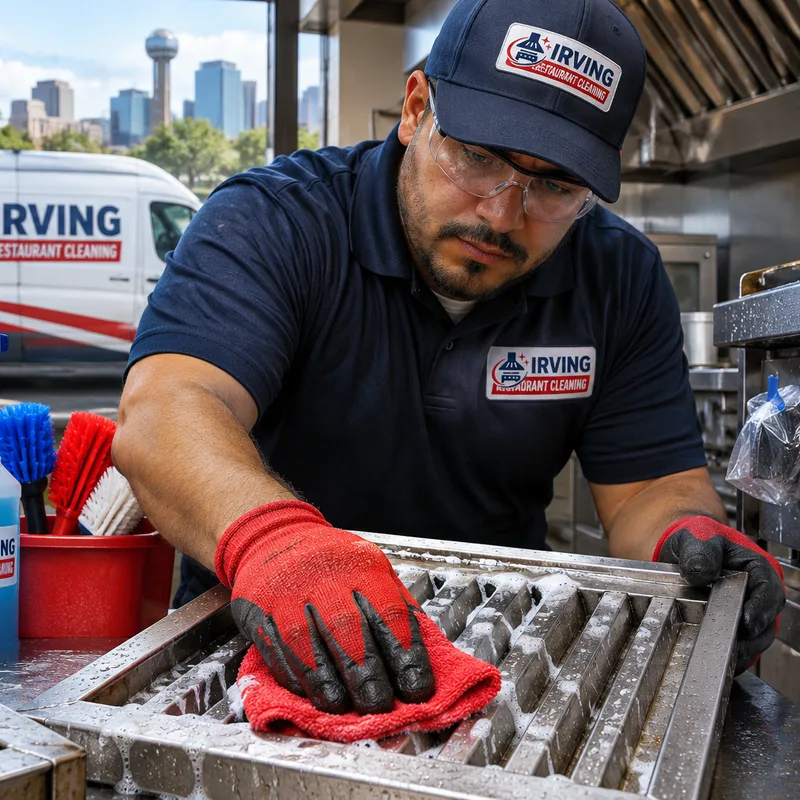
Professional Kitchen Cleaning depends on choosing methods that remove soil without damaging the asset. Stronger chemistry is not automatically better. Aluminum can react with highly alkaline products, painted finishes can dull, natural stone may be acid-sensitive, and excessive water can reach bearings, controls, or electrical connections. Product labels and equipment manufacturer instructions take priority.
Mechanical action does much of the work. Non-scratch pads, brushes, scrapers approved for the surface, microfiber, wet recovery tools, and commercial floor machines may be used where appropriate. Steam can help on some surfaces, but it is not suitable around every seal, control panel, electrical component, or finish. Pressure washing inside an operating kitchen also requires strict containment and is not appropriate for every facility.
Restaurant employees remain responsible for the establishment's food-safety procedures, including any required sanitizing concentration, contact time, verification, and pre-opening checks. Cleaning removes soil. Sanitizing is a separate step performed on a clean surface with an approved product used according to its label.
North Texas heat affects scheduling even when the work is indoors. Cooking lines add substantial heat, and equipment may need more cooling time before safe detail cleaning can begin. Loading access, waste handling, and crew entry should also be planned before late-night work, especially in properties with shared docks or controlled access.
A good recurring plan is based on observed soil rather than a generic calendar. High-use fry stations and cook lines may need more frequent degreasing than dry-storage shelving. Floor edges and spaces beneath movable equipment can be placed on a rotation. Periodic inspections help the restaurant adjust frequency when menus, hours, or production levels change.
Irving restaurants operate under applicable food-establishment requirements, while the City of Irving handles local health inspections. A cleaning company can support a facility's sanitation program, but it does not replace management controls, employee training, temperature records, pest management, equipment maintenance, or regulatory inspections.
Arrange a facility walkthrough to establish priorities, access requirements, and a cleaning schedule that fits your production hours.
Call for a Free QuotePricing depends on kitchen size, soil level, equipment count, access, and the shutdown window. A lightly soiled prep area requires less labor than a cooking line with hardened grease and carbon. Moving equipment, overnight scheduling, residue recovery, and repeat cleaning of neglected surfaces can also affect the proposal. A walkthrough is the most reliable way to produce a written scope and price.
A targeted equipment or floor-area cleaning may fit within one closed period, while a full deep cleaning may require a longer shutdown or several scheduled visits. The actual duration depends on buildup, layout, cooling time, equipment access, and the point when the kitchen must return to food preparation. Extended-hours operations near the airport may benefit from zone-based work.
Yes, after-hours cleaning can often be scheduled when the facility, staffing, and building-access rules allow it. The restaurant must provide enough time for equipment to shut down and cool, for the agreed work to be completed, and for required sanitizing and pre-opening checks. Las Colinas properties with shared access or security controls may require advance coordination.
Only equipment identified as safe and practical to move should be relocated during service. Gas-connected, hard-wired, plumbed, unstable, or unusually heavy units may require a qualified technician or facility representative. The walkthrough confirms which items are mobile, who is responsible for disconnecting them, and what can be reached without creating damage or safety risks.
Internal hood, fan, and duct cleaning is not automatically included in standard kitchen deep cleaning. Those systems require specialized access and a separate scope. Cleaning may cover agreed exterior hood surfaces and accessible surrounding areas, but the proposal should state the exact boundary between general kitchen work and exhaust-system service.
Equipment can return to use only after it is dry, correctly reassembled, checked by the restaurant, and released under the facility's procedures. Food-contact surfaces may still require the restaurant's approved sanitizing step and specified contact time. Gas, electrical, or mechanically serviced equipment may require inspection by qualified personnel before startup.
The right frequency is set by soil load, menu, cooking methods, operating hours, equipment layout, and internal cleaning performance. Frying and high-volume cooking can create faster grease buildup than light preparation. A practical schedule may combine frequent targeted degreasing with rotating detail work on walls, floor edges, shelving, and spaces beneath equipment.
Tell Irving Restaurant Cleaning about your equipment, operating hours, and problem areas. We will help define a clear scope and a workable time for the cleaning.