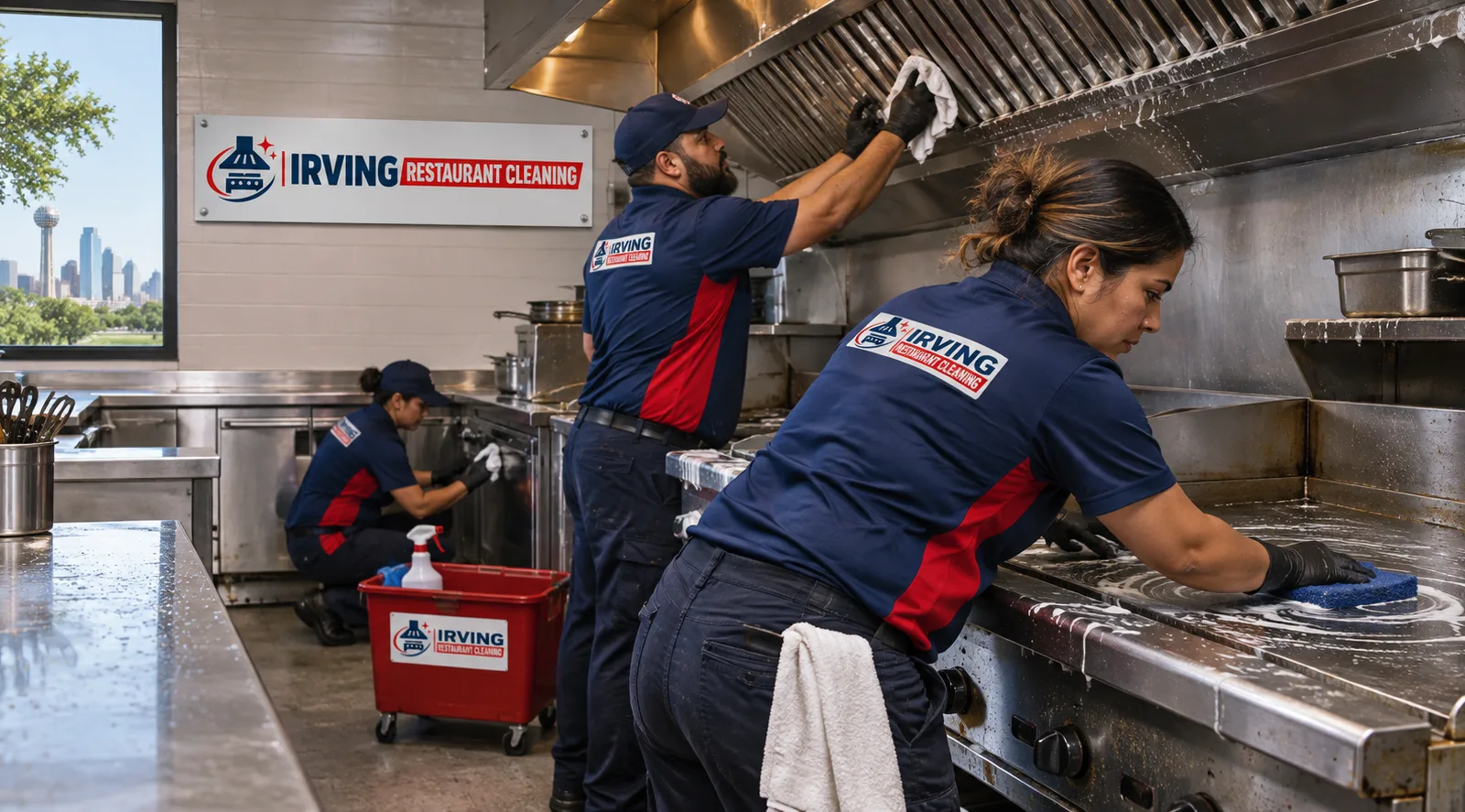
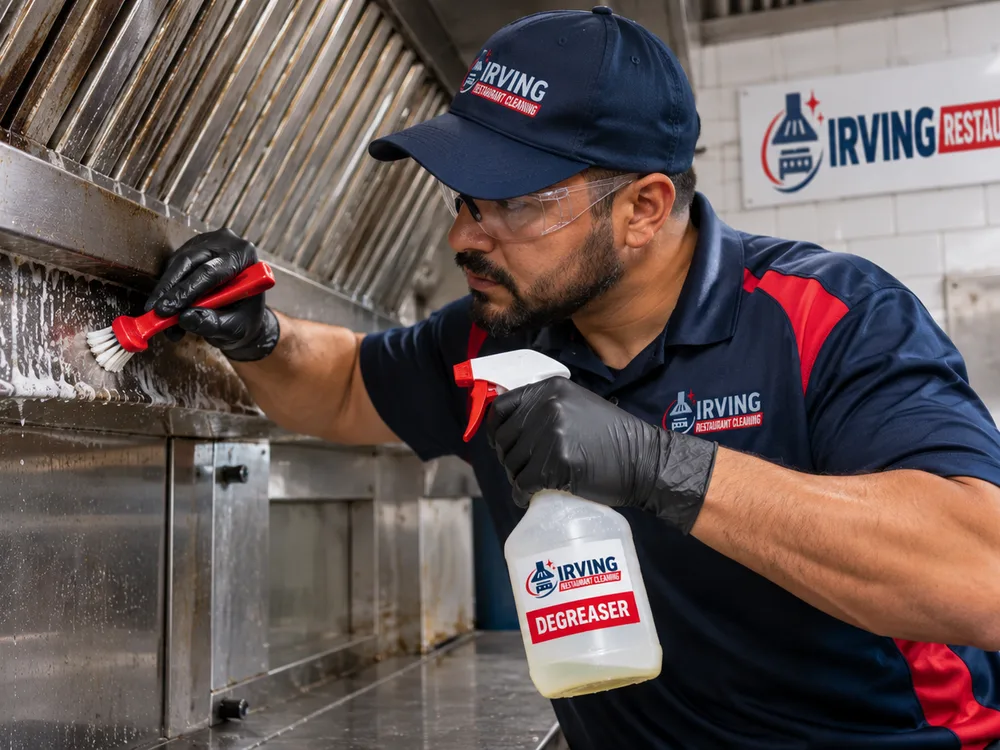
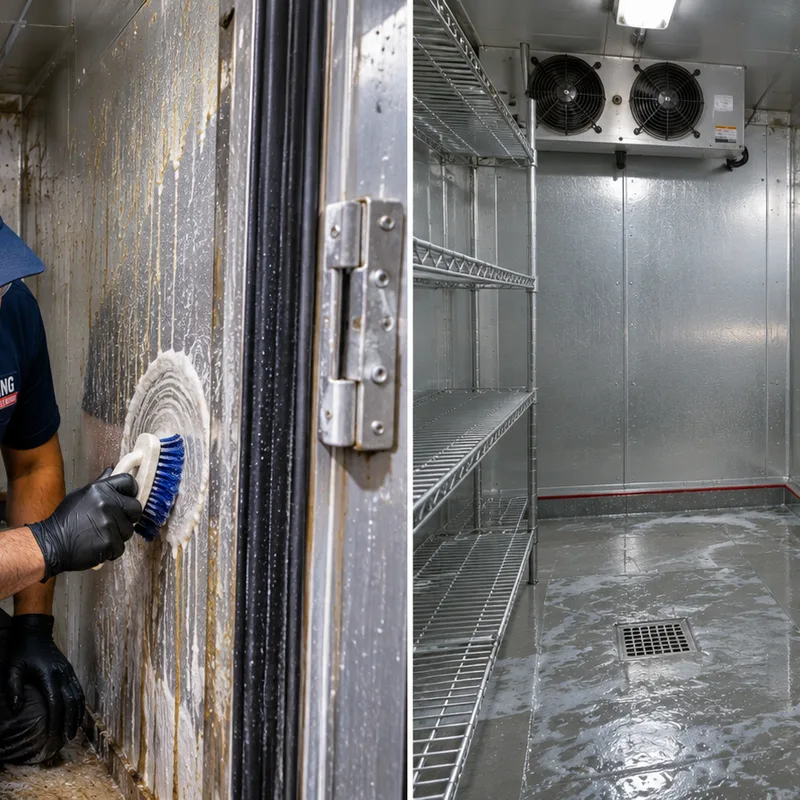
Professional restaurant deep cleaning starts with soil identification. Alkaline degreasers are commonly used for greasy buildup, while carbonized deposits may require longer dwell time and controlled agitation. Crevice tools, detail brushes, microfiber cloths, wet extraction, and floor scrubbers may be used where the surface and access allow. Products are applied according to their labels, including dilution, dwell time, rinsing, ventilation, and personal protective equipment requirements.
Cleaning and sanitizing are separate steps. Cleaning removes grease, food soil, and residue. Sanitizing is performed on suitable, precleaned food-contact surfaces with an appropriate product and label-directed contact time. Disinfection may be used on eligible non-food-contact surfaces when included in the scope. A cleaning contractor should never mix chemicals or apply a product to a surface that its label does not cover.
Some systems require specialist service. Exhaust hood interiors, ducts, and rooftop fans may fall under commercial kitchen exhaust cleaning requirements rather than a general deep-cleaning scope. Fire-suppression components, electrical equipment, gas connections, refrigeration repairs, and pest control also belong with qualified providers. We define these boundaries before work starts.